Key facts: Water Extraction in Historic Norcross
What differs
Old floors change how extraction is done
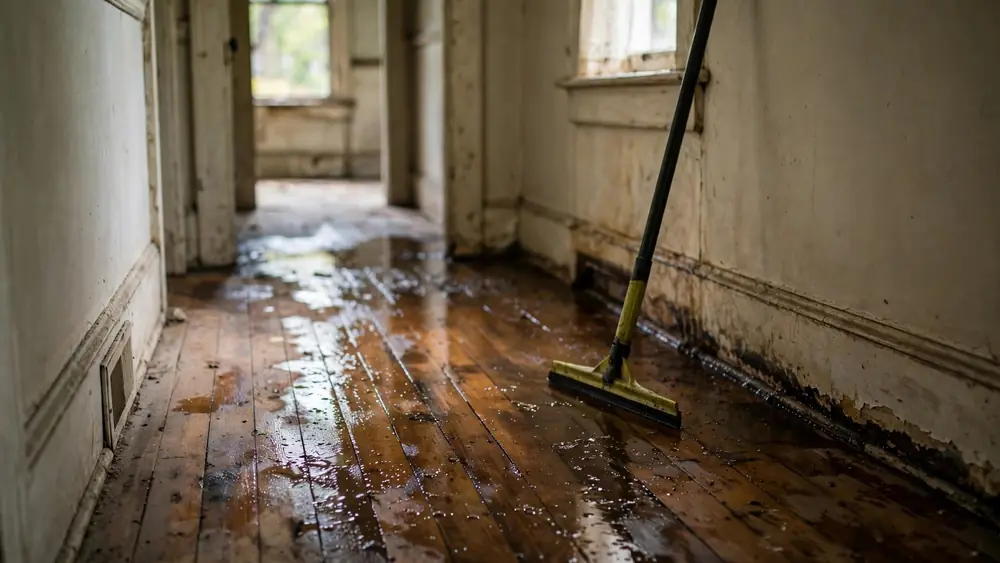
In a house near Thrasher Park, the floor you are drying may be the one that was laid when the place was built. The National Park Service record for the district covers late Victorian and revival-style buildings, and that age shows in narrow boards, old finishes and subfloors that were never designed around wall-to-wall carpet. [1] Water finds the seams between those boards and drops straight through to the crawl space. That can actually help, because less of it stays on top, but it also moves the problem somewhere harder to reach.
Extraction on old wood should be careful and repeated: squeegee or wand first, no aggressive scraping and no dragging heavy machines across boards that have just softened. Runners and rugs come up quickly, since a wet rug on an old floor is the fastest way to stain it and hold water against the finish.
On the day
How a visit usually goes in the old town
- 1
Find a shutoff that works
Valves in old houses can stick. If yours will not move, do not force it. Close the line at another point, or have a plumber do it.
- 2
Look under the floor
If water has gone through, the crawl space may need a small pump before anything upstairs will stay dry.
- 3
Clear original pieces
Label loose trim, doors and hardware instead of bagging them with debris.
- 4
Work the floors gently
Several slow passes with suitable heads remove water without gouging an aged surface.
- 5
Move on to the walls
Readings on plaster tell the operator how far it has wicked, which guides the drying plan.
Under the house
Pumping beneath a pier foundation
Pier and low perimeter foundations leave soil exposed under the house. Water that collects at a low point can be pumped, but wet soil itself cannot; a damp floor of red clay will keep feeding humidity upward until it is covered or has dried. A contractor who goes under an old house should check for wiring, old pipe wrap and any sign of sewage first, because old materials and tight clearances bring their own risks. Our crawl space page explains the follow-up, including vapor barriers.
Discharge needs some thought on small downtown lots. Water pumped onto a neighbour's garden or into the street can end up as a new complaint, and contaminated water should never go toward a storm drain. Ask where the hose will end before pumping begins.
Decisions
What usually stays in an old house
| Item | Likely approach | Reason |
|---|---|---|
| Old hardwood | Extract and dry slowly | Often hard to match, may recover |
| Area rugs | Lift at once, send for specialist cleaning | Dyes can bleed onto floors |
| Added carpet and pad | Often removed | Hides the floor and holds water |
| Plaster walls | Keep and dry if still bonded | Often tolerates clean water |
| Later drywall patches | Judge separately | May need cutting even if plaster stays |
Safety
Lead paint and water together
Wet old paint can flake, and flakes end up in the water and on the floor. If your house predates 1978, assume that lead may be present until shown otherwise. Keep children and pets out, wipe up with disposable cloths instead of dry sweeping, and ask whether the contractor follows EPA lead-safe practices when disturbing painted surfaces. [2] Bags of debris should go out sealed, and tools should not be carried through clean rooms.
Electrics deserve equal attention. Old houses often have mixed wiring from several eras, and the original runs may pass through floors and walls that have just been soaked. Have an electrician check before you restore power to a wet circuit, particularly if you have any knob-and-tube wiring or an old fuse panel.
Logistics
Getting equipment to the house
Streets around the park are not always easy for a large truck, and a historic lot may have mature trees, narrow side yards and steps up to a raised porch. Portable extractors can fill the gap where hoses from a truck-mounted unit will not reach, though they hold less and need emptying. Ask how the crew will protect door frames and stair rails as they carry equipment through, because those are the parts of an old house that are difficult to replace.
Tell your neighbours if equipment is likely to run overnight. Houses here sit close together, and a little warning goes a long way. If anything on the exterior was damaged, photograph it and speak to Norcross Community Development before replacing it, as design review may apply. [3]
Contents
Old furniture and family papers on a wet floor
Older houses often hold older belongings, and those need sorting before the machines start. Veneered furniture can lift and solid antiques can stain the floor where their feet stand in water, so raise them on blocks and keep them away from strong air streams. Old photographs and letters should be separated and kept flat and cool until someone with conservation experience can advise you. Do not try to pull apart stuck pages while they are wet. Rugs with natural dyes are a particular risk, as color can transfer to the boards beneath them within hours. Take photographs of each piece where it stands before anything moves, as they also record how the rooms were arranged. If anything needs to leave the house for specialist care, keep a simple list with where it went and who has it. That list is useful for insurance, and it stops small items from going astray while rooms are being worked on. Ask the crew to stack nothing against damp plaster, since the wall needs air and the furniture needs to stay dry.
Questions
Extraction questions from old-town homeowners
Will extraction hurt my old pine floor?
Gentle extraction should not, and leaving water there is much worse. Ask for soft heads and no dragging of heavy machinery. Any cupping that follows comes from moisture rather than suction, and slow drying gives old boards their best chance of settling back.
What if water has gone under the floor?
Expect a look in the crawl space, and possibly a small pump for any low spots. Wet soil will keep raising humidity until it is covered or dry, so ask whether a vapor barrier is part of the plan.
Should I remove carpet that someone added over a hardwood floor?
Usually yes after a soaking. Wet carpet and pad hold water against the wood beneath, and old tack strips and staples may also need attention. Photograph everything first in case your insurer wants to see the original condition.
Do I need the city for emergency cleanup?
Removing water and drying the interior is rarely a design review matter, but exterior changes can be. Call Norcross Community Development on the number on its application form if exterior elements need replacing, and ask about current rules. [3]