Key facts: Water Extraction on the Buford Highway Corridor
What differs
Portable machines and upstairs units
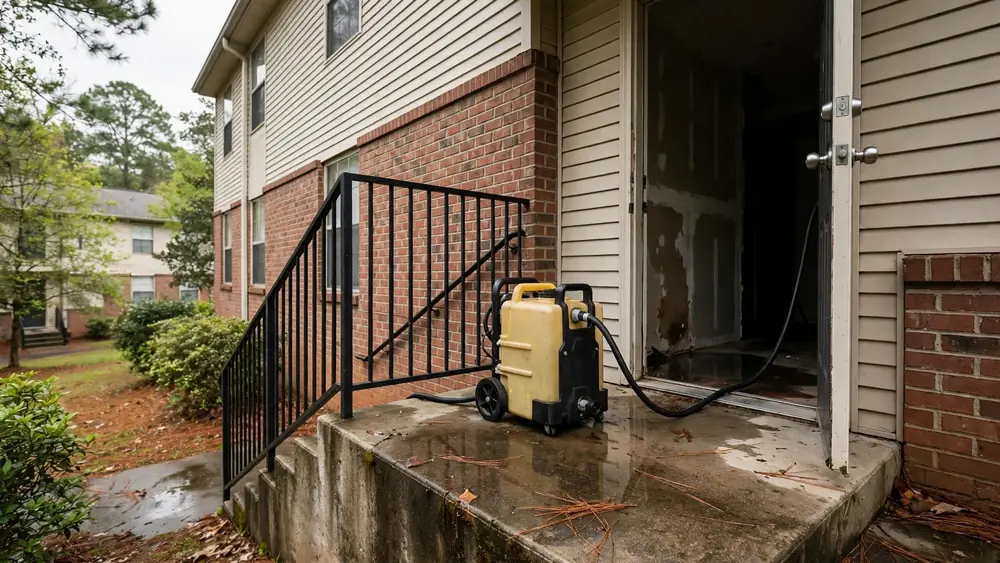
Large complexes went up along the highway during the 1960s and 1970s, and many are two- or three-storey walk-ups with exterior stairs. [1] Truck-mounted hoses can be pulled up to a certain distance, but long runs lose performance and create tripping hazards on shared stairs. Crews often rely on portable extractors for upper floors, moving between units as they go. In an event affecting several homes, ask how the equipment is being split, because the worst-affected unit is not always the one that reported first.
Water that gets onto an upper-floor carpet goes down rather than staying put. The unit below will have a wet ceiling and perhaps a wet floor, so extraction needs to take place in both homes on the same visit if at all possible. The tenant below may not even be home, so management needs to arrange entry.
Order of events
Who should do what, and when
- 1
Tenant reports the leak
Call the manager or after-hours line and describe the source. Text or email a photograph so that there is a time-stamped record.
- 2
Maintenance stops the water
Some units have accessible valves, but a building or riser shutoff may require staff with keys and knowledge of the building.
- 3
Owner authorises work
Drying and extraction of the building are normally for the owner to approve, and a tenant cannot generally sign for them.
- 4
Crew checks neighbouring units
Above, below and to the sides. Water follows plumbing chases and the base of shared walls.
- 5
Tenants move what they can
Lift electronics and documents. Keep your own list and photos for your renters insurer.
Water type
Is it clean, grey or sewage?
The type of water matters as much in a rental as in a house. A supply line break is usually clean to begin with, whereas a clogged drain that backs up through a ground-floor tub is another matter altogether. Sewage on the floor means everyone stays out until it is dealt with, and porous materials are generally removed rather than extracted and dried. [2] If it is coming from a shared line, tell management and report it to Gwinnett dispatch as well if a public main may be involved. [4]
Tenants sometimes want to mop up to be helpful. For a small clean leak that is fine, but please do not try to clean up sewage or walk in water around plugged-in appliances. Protect yourself and your family first; your safety comes before the carpet in a building you do not own.
Who handles it
Typical split between tenant and owner
| Task | Usually | Note |
|---|---|---|
| Shutting building lines | Maintenance staff | Tenants may close fixture valves |
| Extraction from carpet and floors | Owner's contractor | Tenant allows access |
| Moving tenant belongings | Tenant, often with help | Photograph first |
| Replacing tenant belongings | Renters policy, if any | Keep a dated list |
| Unit-below inspection | Owner | Request it in writing if it is overlooked |
Shops
Extraction in strip centers
In a storefront, the question of timing can be as pressing as the water itself. A wet restaurant cannot serve until it has been cleaned and checked, and stock on low shelves may be at risk. Tile and sealed concrete floors are quicker to extract than carpet, but floor boxes, wall coolers and shelving units can hide water behind and under them. Move refrigerated stock early, keep a list of what is thrown out, and speak to your landlord about the demising walls, since the shop next door may be wet as well.
Sidewalk and parking lot hose runs need cones or some form of warning. Your landlord or the property manager can help coordinate this, particularly if the shared lot is busy at the time of the work.
Timing
After a cold snap everybody calls at once
During the December 2022 freeze, reports from metro Atlanta described a great many buildings needing help at the same moment, with some residents dealing with damage for weeks. [5] [3] If that happens again, there may be a wait. While you wait, you can raise belongings, keep doors open to help air move and check in with neighbours, and managers can pump or vacuum where it is safe in order to keep things from getting worse. Everything you do should be recorded for later, because in a multi-tenant event, memory fails quickly.
Equipment
Power and water supply in older apartments
Portable extractors and pumps draw considerable current, and a circuit in an older apartment may trip when a machine starts. Crews often need to find a working outlet in a dry room or a nearby unit, and that requires the manager's cooperation. Wet panels and outlets should stay off until checked. Hoses across shared landings need securing, as these stairs are also the way out of the building for other residents. Ask that a clear route be kept at all times, particularly at night, and that hoses be taken up whenever the crew leaves. Dumping recovered water matters as well. A shared floor drain or laundry drain might seem handy, but it may already be under strain from the same event, and sending more water that way can move the problem to a ground-floor neighbour. A careful operator will ask where the building's drains run before choosing a place to discharge. Managers who know the answer can save the crew a good deal of time on the first visit.
Questions
Extraction questions from corridor tenants and managers
Can I hire my own extractor if my landlord is slow?
Getting water out of your own belongings is up to you, but work on the building normally needs the owner's approval. Put your request in writing and record the time. If it keeps being delayed, seek advice from a lawyer or legal aid service about your options. [6]
Why is the crew in my apartment if the leak is upstairs?
Water travels downward through floors and along plumbing chases, so a check of the unit below is normal. Allow access if you can, and ask what they found. Take your own pictures of the wet ceiling or carpet, and tell your renters insurer about any damage to your belongings.
Will they extract water from my carpet or remove it?
Clean-water carpet can often be extracted and dried, but the pad is usually removed, and heavily contaminated carpet comes out. In a rental this is the owner's decision, though you can ask what they intend to do and when.
Can a shop stay open during extraction?
Sometimes, if the wet area can be closed off and public paths stay safe. Food businesses have further limits, so check with your health inspector. Discuss hoses, power and noise with your contractor and landlord, and post a clear notice for customers.
Sources and citations
- [1]Wikipedia: Buford Highway
- [2]IICRC: ANSI/IICRC S500 water damage standard
- [3]Rough Draft Atlanta: Burst pipes across the metro
- [4]Gwinnett County Water Resources: Report a problem
- [5]GPB News: Burst pipes damage apartments and businesses across metro Atlanta
- [6]Justia: O.C.G.A. section 44-7-13, landlord duty to repair