Key facts: Water Extraction in Berkeley Lake
- Berkeley Lake centres on an 88-acre private lake, and the Chattahoochee forms its northern boundary. [1]
- Gwinnett dispatch takes reports of sewer spills and backups at 678.376.7000. [2]
- With Water Extraction in Berkeley Lake, aim to finish drying materials within the 24 to 48 hours the EPA advises. [3]
What differs
Hillside access and stepped houses
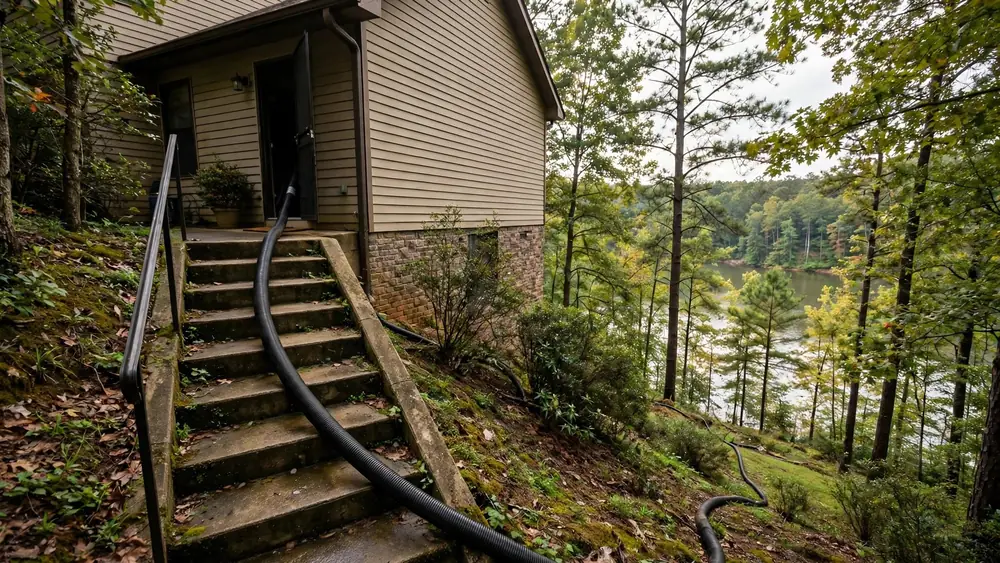
Berkeley Lake is small, hilly and largely residential, with its 88-acre private lake at the centre and the Chattahoochee along its northern edge. [1] A house may step down its lot, so the wet room can be two floors below the front door. That means long hose runs, a good deal of carrying and some planning about which equipment will actually fit. Portable extractors and small pumps are often the practical choice, even where a large truck could technically get onto the drive.
Stairs are the awkward part. Wet hoses and cords on a narrow internal stair are a hazard, especially for an older owner who still needs to get around the house. Ask for one clear route to be kept, and for cords to be taped or routed away from steps. If you are unsteady on stairs, tell the contractor; do not try to clear the way yourself.
Before they arrive
What you can do while you wait
- 1
Stop the source
Close the main or fixture valve if you can reach it safely. If the valve is on a flooded level with electrics nearby, wait for help.
- 2
Note the access
Think about where a van can park and the shortest door to the wet room. Clear that route if it is easy to do so.
- 3
Lift what matters
Take documents, medicines and photographs upstairs, and leave the heavy lifting to others.
- 4
Check the uphill side
From a safe spot, see whether rain is running against the house. That will shape the visit.
- 5
Call someone
If you are alone, let a family member or neighbour know, and consider having them there when the crew arrives.
Where it goes
Pumped water and the lake below
Every hose ends somewhere, and here "downhill" may eventually mean a neighbour's yard, a stream or the lake. Clean water from a supply line can often go into a suitable household drain or be released gradually away from the foundation. Water from a sewage event or a contaminated flood must not be sent toward any of those. Ask specifically how the crew will dispose of it. Gwinnett's dispatch line takes reports of sewer spills if you see one. [2]
Slopes also erode quickly under a hose. A discharge running across bare soil can cut a channel and carry silt onto the next lot. A splash pad, a long run down a planted area or discharge into a proper drain keeps that from happening. It is a small detail, and it can prevent an awkward conversation with the neighbours downhill.
Tool choice
Equipment that suits steep lots
| Situation | Likely tool | Trade-off |
|---|---|---|
| Wet room near the driveway | Truck-mounted extractor | Strong suction, but needs a place to park |
| Wet room two floors below the door | Portable extractor | Easier to carry, smaller tank |
| Deep water on lowest level | Submersible pump | Needs a safe discharge route |
| Crawl space under stepped floor | Small pump and wet vacuum | Tight access; wet soil remains |
| Power out after a storm | Generator-run equipment | Needs ventilation outdoors |
Low-use floors
Water that has been there a while
Many homes here have a guest level or storage floor that gets little use, and a leak there can run for days. Extraction is still the first step, but the water may no longer count as clean, and the carpet, pad and lower drywall may have absorbed far more. Tell the contractor when the area was last seen dry. If you are not sure, say so, because they need to plan for the worst case, and the EPA's 24 to 48 hour drying advice may already have passed. [3]
Check also for a musty smell or any visible growth before equipment starts blowing air around. If there is growth, tell the crew, because they may want to isolate the area first.
Storms
When a tree or a storm is the cause
Water from a storm-damaged roof can run through several levels on its way down. If a tree came down on the house, stay clear of any power lines and call the utility first. Gwinnett residential power is split among Georgia Power and various EMCs, so the right number depends on your address. [4] Extraction comes after the roof has been covered, or the crew will find themselves working against the same rain. Save the photographs of the tree for your insurer before it is cut away.
Who helps
Getting help without taking risks
Moving belongings during a flood is where many injuries happen, particularly on stairs. If you live alone or have trouble with stairs, leave the heavy items for the crew or a younger relative, and focus on deciding what matters most. A short list of priorities given to whoever arrives is more useful than a tired person carrying boxes. Ask at the start who will move contents, because that is not automatically part of every job. Bear in mind that some of those offering help after a storm may not be who they say they are. Asking for a business name and written scope is reasonable, and you can check those details yourself or have a family member do so. If a contractor is coming a long way up a narrow street, let close neighbours know, since parked cars and trailers may block the road for a while. Small communities notice unfamiliar vans, and a quick word can head off confusion.
Questions
Berkeley Lake extraction questions
Can water from my house be pumped into the lake?
Do not assume that it can. Clean water should be released in a controlled way on your own property or into a suitable drain, and contaminated water must never go toward the lake or its streams. Ask the contractor how they will manage it, and check with the city if you are unsure.
How do they get equipment to my lower level?
Usually through a walk-out door if there is one, or down internal stairs with portable machines. On a steep lot this can take longer. Telling them about parking, steps and door widths before they arrive helps them bring the right equipment.
My lower floor has been wet for a week. Is extraction still worthwhile?
Yes, because standing water and wet pad keep raising the humidity across the house. The job will likely include more removal than a same-day response, and possibly mold precautions. Share what you know about the timeline, including when someone last saw the room dry.
Can I use a wet vacuum on my own?
For a small clean spill on a hard floor, if you are comfortable and the outlet is protected, yes. Stairs and heavy full tanks are a real risk though, so get help. Never use one on sewage, floodwater or anywhere near live electrics.