Key facts: Structural Drying in Historic Norcross
What differs
Why fast is not always better here
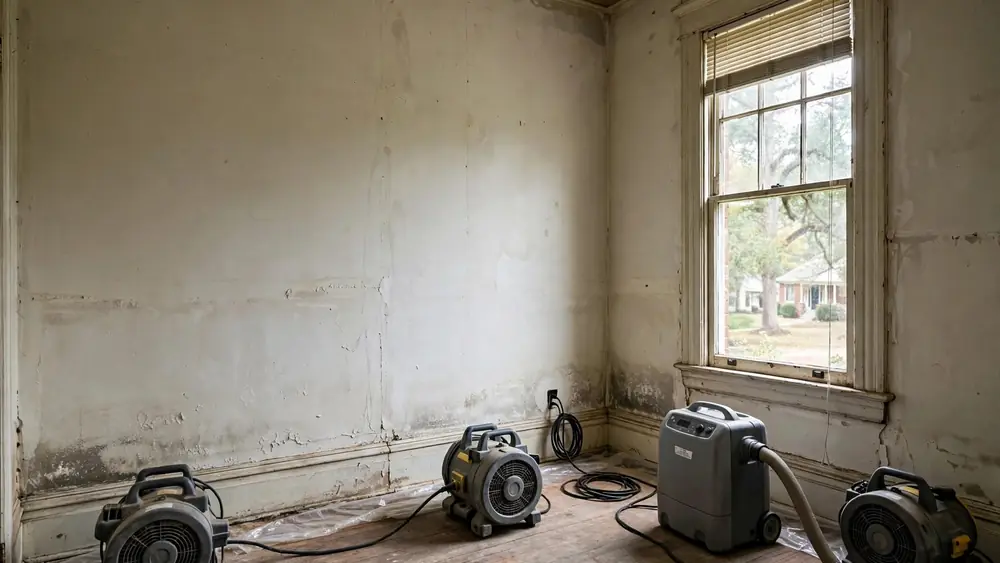
Drying modern drywall quickly does little harm. Drying old wood quickly can crack, split and twist it. Many of the 194 contributing buildings in the Norcross Historic District have aged timber, trim and floors that have reached a stable moisture level over generations. [1] A sudden drop in humidity around a wet area puts stress on them, so a skilled operator may hold humidity at a moderate level and take longer over the job. That is a reasonable choice as long as moisture readings keep moving the right way.
Measuring old walls takes care too. A pin meter reads the surface, and plaster can feel dry while the lath behind it remains damp. Readings at several depths and over several days are more reliable than one, and a dry reference point from an unaffected room in the same house is especially valuable because old materials vary so much.
Materials
How old materials behave while drying
| Material | Behaviour | Good practice |
|---|---|---|
| Lime plaster on lath | Dries slowly, keys may fail | Tap test, moderate pace, reattach if loose |
| Old heart pine floor | Cups, then often settles | Slow drying, no sanding until stable |
| Solid wood trim | Moves and can split | Remove carefully if it traps water |
| Balloon-framed stud bays | Air and water travel vertically | Check above and below the leak |
| Brick piers and chimneys | Hold moisture for a long time | Allow more time; watch for salts |
Framing
Tall cavities move air in surprising ways
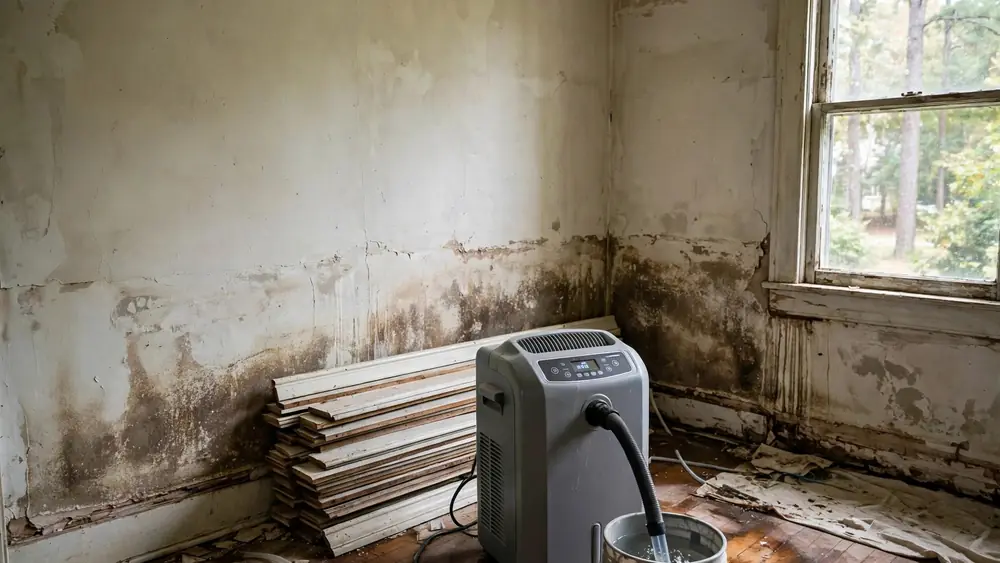
Some older houses were built with stud bays running from the sill to the attic. Moisture can travel up those bays, and water from an upper floor can reappear lower down in places you would not expect. For drying, the open bay can help: dry air fed in at the bottom can move upward through the wall without much opening up. A small hole behind a baseboard, patched afterward, may do the job of a far larger cut. Ask if this has been considered before anyone proposes removing large areas of plaster.
Do check for insulation first. Blown-in material added at a later date can fill those cavities and hold water. If you are unsure what is in the walls, a small inspection hole answers the question, and older loose-fill should be tested before it is disturbed.
Below
A damp crawl keeps the floor wet
In a house on piers, the floor above can dry only as fast as the air beneath allows. If the soil below is damp, joists and floorboards keep drawing moisture from it. Modern practice often starts with covering the ground, removing any wet insulation and using a dehumidifier in the crawl space if it can be enclosed well enough. [3] Open foundations cannot be closed in the same way without consequences for appearance and airflow. Have that discussion with someone who understands older buildings, and check with the city first about anything visible from outside. [4]
The plan
A sensible sequence for an old house
- 1
Check for lead and asbestos
Before anything is cut or sanded, ask about testing and lead-safe practice. [2]
- 2
Set moderate conditions
A contained room, a dehumidifier and gentle air movement are usually the starting point.
- 3
Remove what traps water
Rugs, vinyl and later carpet come up. Trim may be numbered and removed.
- 4
Read daily, at depth
Log surface and deep readings against a dry reference in the same house.
- 5
Adjust the pace
Slow down if boards begin to crack, and speed up if readings stall and materials are stable.
- 6
Repair like with like
Plaster repairs and matched wood take time, so plan for them.
Time
What to expect
Expect it to take longer than the typical three to five days often quoted for an ordinary clean-water job. Old plaster, thick timber and damp crawl spaces can take more time, and you should plan accordingly. Keep the equipment running as advised and resist the urge to repaint early. After the equipment leaves, keep an eye on the readings for a couple of weeks if you can, particularly on floors, because old wood can continue to move as seasonal humidity changes. A hygrometer in the room is a useful companion for that.
Seasons
Choosing conditions by the time of year
An old house is affected by the season in which it gets wet. In a humid Georgia summer, the challenge is getting the air dry enough while the building leaks at every window sash, so temporary sealing of a contained room can matter more than extra machines. Single-pane windows may run with condensation next to a dehumidifier, and it is worth wiping them so that sills and old paint stay dry. In winter, cold rooms slow evaporation, and a modest amount of heat may help, provided it is raised gradually. Whatever the season, watch doors and windows as drying continues, because wood that has swollen will shrink back and may bind or gap in the process. Do not plane or trim a sticking door until the building has settled, since the problem often disappears on its own. Take a few photographs of joints in trim and floor at the start of the job and at the end. They will help you see what moved, and whether it has settled.
That record is also useful for later owners.
Questions
Questions about drying an old Norcross house
Can I use a heater to speed up drying an old house?
Be careful. Strong heat can crack old wood and plaster, and it raises the air's capacity for water without removing it unless you also dehumidify. Modest warmth can help in cold weather, but it should be part of a monitored plan, not a shortcut.
Why is a contractor asking to remove my trim?
Old trim can trap water against the wall, and removing it can reveal wet plaster and allow airflow. Done well, each piece is numbered, stored and refitted. Ask how it will be taken off, because old finishes and nails can split it if rushed.
Should plaster be replaced with drywall?
Not automatically. Sound plaster can often be dried and repaired, and it contributes to the character of a historic room. Drywall may be practical for badly damaged sections or hidden areas, and a plasterer can advise you on the options.
How long before I can refinish old floors?
Wait until moisture readings have stabilised and stayed there, which can take weeks after equipment leaves. Sanding too early can leave boards uneven once they move again. Old floors may also contain lead-based finishes, which is another reason for caution.