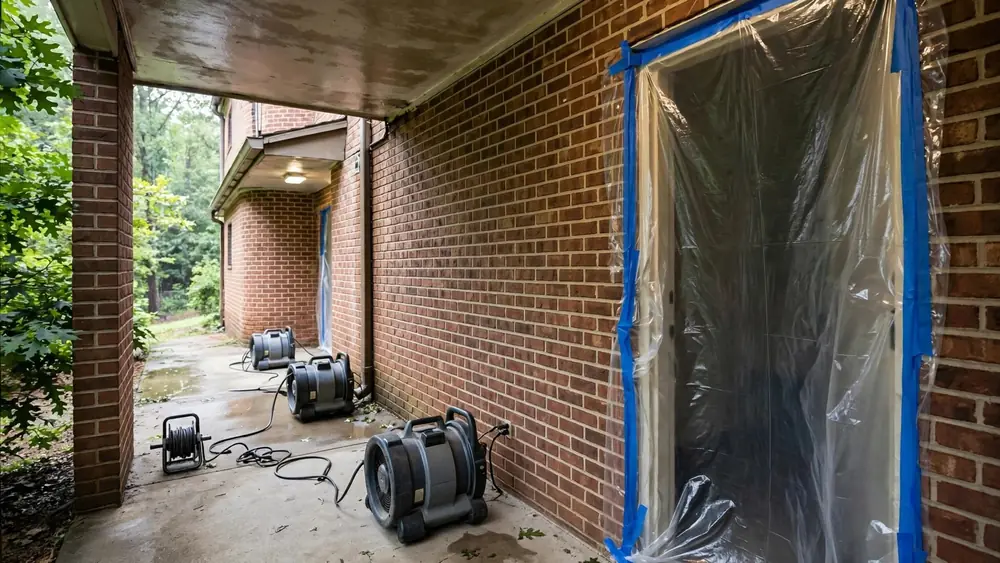
Key facts: Structural Drying on the Buford Highway Corridor
- Buford Highway apartment complexes date largely from the 1960s and 1970s. [1]
- Frozen sprinkler lines flooded multi-unit buildings around metro Atlanta in December 2022. [2]
- The EPA suggests keeping indoor humidity under 60 percent to limit mold. [3]
- Structural Drying on the Buford Highway Corridor: Georgia law sets a landlord's duty to keep premises in repair. [4]
What differs
Drying a building rather than a room
Buildings along this corridor date largely from the postwar decades, and the apartment communities were built as repeated stacked units. [1] Kitchens and baths usually share a wet wall, so a leak upstairs sends water down a chase that passes behind cabinets in every unit below. Drying only the unit that reported the leak leaves that chase wet. A thorough survey includes every unit in the stack and those on either side at the point of failure.
Multi-unit drying also changes the equipment plan. A household circuit may not take many air movers and a large dehumidifier, and old panels can be touchy. Contractors may need to spread the load, run dedicated cords and agree with the manager on which circuits can be used. Shared corridor air can also carry moisture, so doors and vents may be closed to keep each drying chamber stable.
Where to check
The usual trouble spots in a stack
| Location | Why | How it is checked |
|---|---|---|
| Behind kitchen base cabinets | Shared wet wall | Toe-kick removal, meter readings |
| Under tub surrounds | Water follows pipes down | Access panels, ceiling below |
| Ceiling of unit below | Holds water above drywall | Thermal camera, moisture meter |
| Along corridor walls | Water runs along the slab | Readings at the base of the wall |
| Equipment closets | Water heater or HVAC source | Visual check, meter on walls and floor |
Fire walls
Openings must be planned
Some walls and ceilings in apartment buildings form fire-rated separations between units or from corridors. Cutting into them to speed up drying has consequences, because any opening has to be repaired to the required rating before the building can be considered sound again. If a frozen sprinkler branch was the cause, as in many of the reported December 2022 cases in metro Atlanta, the fire protection contractor must also restore the system. [2] Good coordination prevents walls being closed before all of this is checked, and prevents drying being held up longer than it needs to be.
Keep people informed
How managers can run the job well
- 1
Tell every affected household
Who, what, how long, and how to reach someone. Write it down and post it.
- 2
Agree access times
Daily readings mean entry to each unit, so set a regular time. Respect tenants' privacy and schedules.
- 3
Keep a log for each unit
Readings, equipment and dates by unit number. This helps with claims and with any later dispute.
- 4
Watch power use
Crews may need to spread cords and machines to avoid tripping old circuits.
- 5
Explain the noise and heat
Machines run day and night and warm the rooms. Ask how tenants with young children or health needs can be helped.
- 6
Close out unit by unit
Confirm each unit as dry before equipment leaves it, then schedule repairs.
Tenants
If machines are running in your home
It is normal for an apartment to be noisy and warm while drying takes place. Please leave the equipment running, since turning it off slows the job and may affect your building. If you need something moved, or a particular outlet freed up, ask the crew or the manager. Keep children away from cords and fans, and tell management if you notice a new smell, a new stain or anything that seems dangerous.
You may ask for an estimate of how long equipment will stay. Nobody can promise an exact day, because readings decide, but it is fair to ask for a rough schedule, and for an update if it changes. Keep your questions in writing so that there is a record. If mold has appeared or a smell lingers afterward, raise it in writing right away. [3]
Strip centers
Keeping trade going during drying
A shop can sometimes stay partly open if the wet zone can be separated with plastic containment and customers kept away from equipment. A restaurant usually cannot, while dust and air movers are in the kitchen or the dining room. Ask the contractor about containment and air filtration, and your health inspector about reopening. Shared rear corridors and roof drains should be looked at early, because a wall drying well on your side can get wet again from next door.
Before and after
Readings tell tenants and owners the same story
Disagreements after a multi-unit loss often come down to whether a unit was ever properly dry. Daily readings by unit settle most of them. A useful log names the unit, the wall or floor location, the material, the reading and the date, along with a dry reference from somewhere untouched in the same building. Because these buildings repeat the same layout, a matching spot in an unaffected unit can make a good comparison, as long as the tenant agrees to it. Keep logs together with the plumber's report on what failed, as insurers for the owner and for individual tenants may each ask for them. When equipment leaves, give each household a short note saying when it was checked and who to tell if a smell or stain appears. A note like that takes a minute to write. It also tends to bring problems to light while the contractor is still engaged, when they are far simpler to resolve than they would be a few months later.
File these notes with the building records for next time.
A copy helps the next manager too, and it shows what was done.
Questions
Corridor drying questions
How long will fans run in my apartment?
Usually for several days, sometimes longer in the unit where the leak started. Readings decide when each machine can go, and a humid building may need more time. Ask management for a rough schedule, and ask to be told if plans change.
Can I switch the machines off at night?
Please do not, unless the crew has told you that you can. Turning them off lets humidity rise and slows the job. If the noise is a real problem, for example for a baby or a shift worker, talk to the manager about any possible adjustments.
Should my rent change while my unit is being dried?
That depends on your lease, on how much of the home you can use and on Georgia law, so this site cannot advise on it. Put your question to management in writing, and consult a lawyer or legal aid service if you need specific advice. [4]
Why is the crew cutting the wall in the unit below?
Water may have collected above that ceiling or behind that wall, and wet insulation or drywall may need to come out. Ask what the moisture readings showed. In a fire-rated assembly, the repair must restore the rating, and the manager should be coordinating that work.