Key facts: Structural Drying in Berkeley Lake
What differs
Slow leaks and long-wet materials
Fresh leaks dry on a fairly predictable course. A leak that has run unnoticed in a guest bath or storage level has soaked deeper, into framing and subfloor, and it may have started growth. Berkeley Lake has only 799 housing units and an older median age than most places nearby, and in a big house with one or two occupants, some rooms simply do not get visited often. [1] Tell the contractor honestly how long the room may have gone unchecked, because it changes how much should be removed and how the area should be contained before air movers go on.
If there is a musty smell or visible growth, containment and filtered air usually come first. Blowing air across moldy material spreads spores into clean rooms. The EPA generally treats areas above about 10 square feet as work for experienced people. [2]
Air
Damp air on a wooded slope
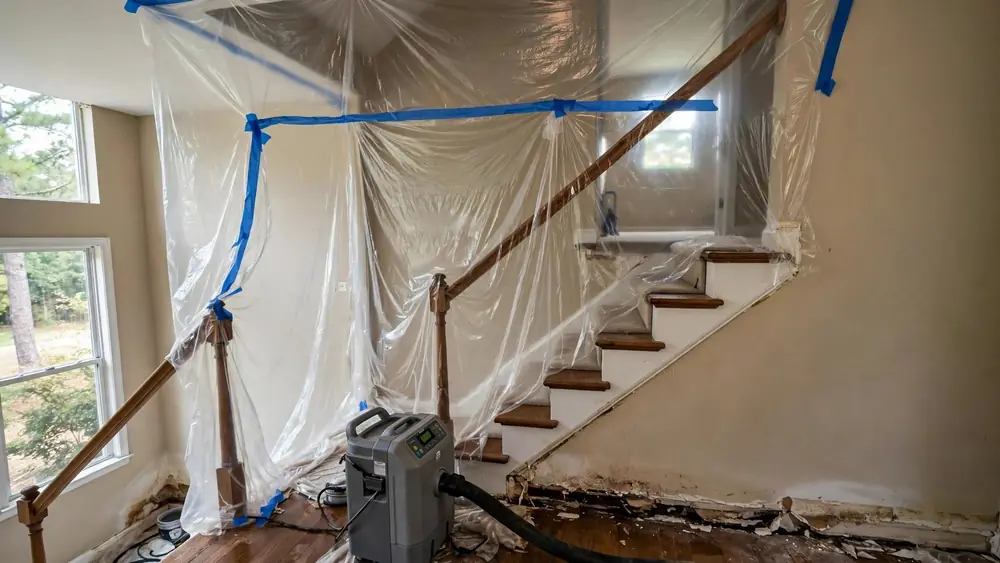
Shaded, wooded lots stay damp for longer after rain, and a home close to the water or low on a hill may see high humidity on many days of the year. This is one more reason to dry with the house closed up and dehumidifiers running, rather than with windows open to the view. It is worth taking a reading outdoors and indoors before deciding; if the outside air is genuinely drier, as it may be on a crisp winter day, a contractor may use it. A house with several levels can also act like a chimney, with damp air moving from a lower floor up the stairwell, so closing doors or hanging plastic at the stairs helps keep the effort where it is needed.
Stepped houses
Where each level causes trouble
| Level | Likely issue | Drying note |
|---|---|---|
| Top level with attic above | Attic line or roof leak | Insulation out; check every floor below |
| Main level with deck | Door sill or ledger leak | Trace to the rim joist and floor edge |
| Lower level against hill | Buried wall seepage | Stop outside water; read wall repeatedly |
| Lowest walk-out | Runoff, sump, sewer connection | Identify the water type before drying |
| Crawl under a stepped section | Damp soil, hard access | Ground cover and a dehumidifier |
Practical plan
How to make a long job easier to live with
- 1
Pick a clear route
Keep one safe way through the house, with cords off the stairs.
- 2
Set a schedule for readings
Know when someone will come each day, particularly if you live alone or are away.
- 3
Name a second contact
Give the contractor a relative's or neighbour's number in case you cannot answer.
- 4
Watch the power
Equipment on one level may trip older circuits, so ask them to spread the load.
- 5
Decide about sleeping
Noise and heat travel up stairwells. A bedroom on the far side of the house may help.
- 6
Ask for the log at the end
Keep it with your photographs and insurance papers.
Permits
Before anything goes back
The city says that most alterations and renovations require a building permit and asks residents to contact City Hall if they are unsure, so raise rebuilt walls and any electrical or plumbing changes there before work starts. [3] Make sure the drying is confirmed before an inspection and before anything is closed in. A permit stage is also a useful checkpoint: if someone wants to hang drywall but cannot show you dry readings, stop and ask why.
After
Checking on rooms you rarely use
Once the job is done, keep checking. A small hygrometer on the affected level, looked at weekly for a couple of months, will show whether humidity is staying within the range the EPA suggests. [4] Open closets and cabinets occasionally, sniff for any change and look along baseboards. A leak alarm near the original source gives you early warning, and it spares you walking every floor. If you travel often, ask a neighbour to look in during wet spells and hard freezes. Ask whoever repairs the source to show you the shutoff for that fixture, so that the next problem can be stopped at once.
Older materials
Additions and mixed construction
Homes that have been extended have more than one kind of wall, floor and foundation under one roof. One section may have plaster or solid paneling, another modern drywall, and the join between them is a frequent place for water to linger. Drying plans should treat each section on its merits, with its own dry reference reading, since a target taken from the newer part of the house may not suit the older part. If a home predates 1978, ask about lead-safe practice before painted materials are cut or sanded. [5] Paneling on furring strips against a buried wall deserves special attention, as it can hide wet framing and dark growth for a long time. Removing one panel with care often shows whether the rest need to come off. Ask to see the back of the first piece. Decisions taken after looking are usually better and easier to defend to an adjuster than those made from the room side alone.
Solid-wood wall coverings also tend to dry more slowly than the framing behind them, so stack removed panels with air gaps between them and away from the equipment, then check them for warping before refitting.
Number them as they come off the wall.
Questions
Drying questions from Berkeley Lake
Should I open windows toward the lake to dry things out?
Usually not, because humid air works against the dehumidifiers. On a dry, cool day outdoor air can sometimes help, and a simple humidity reading inside and out will tell you. Ask your contractor before opening up a house with drying equipment running.
How long will a slow-leak job take?
Often longer than a fresh leak, because water has reached deeper and more material may have to come out first. Once wet items are removed, drying follows readings, and thick framing is usually last. Ask for an updated estimate after the first few days.
Do I have to stay at home during the job?
No, but someone needs to give access, and daily readings have to be taken. If you plan to be away, agree on who holds the key and who approves changes. Do not leave equipment running with no plan for checking on it.
My house was empty for a month. Is it safe to enter?
Be cautious. Look for sagging ceilings, smell for gas or sewage and avoid wet areas near electrics. If you find widespread growth, keep your visit short and consider wearing an N-95, particularly if you have asthma or allergies. Call for help before you begin any cleanup.