Key facts: Burst Pipes on the Buford Highway Corridor
What differs
One failure, many households
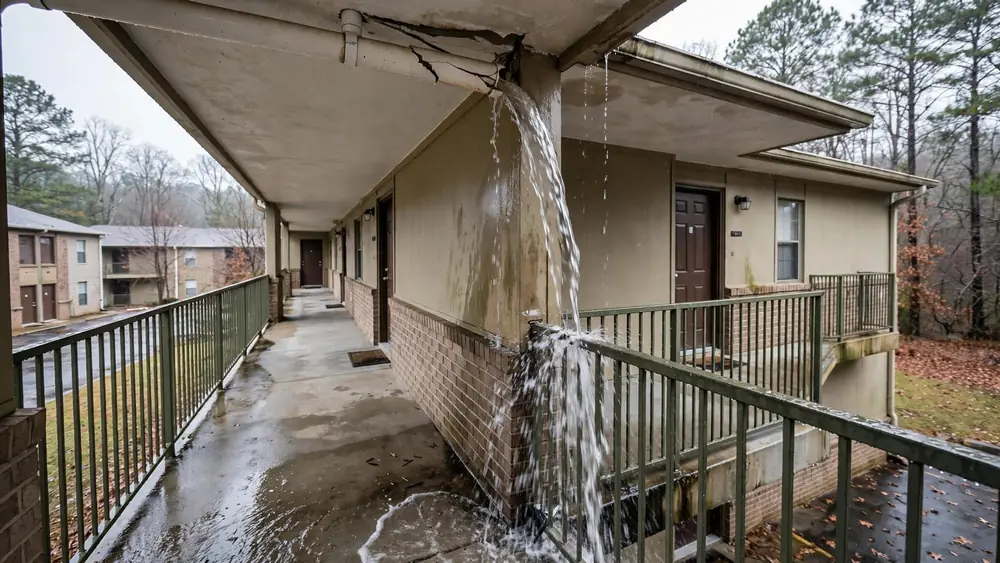
The December 2022 reports from around metro Atlanta describe the pattern well: frozen sprinkler lines and supply pipes breaking, water coming through hallways, units and lobbies, and alarms going off. [1] [4] Those were reports from across the region rather than from any specific building on this corridor, but the 1960s and 1970s garden apartments along the highway share many of the exposed features involved. [2] A single line can affect many households at once, and most residents cannot shut it off themselves.
It helps to know beforehand what you can control. Most units have small valves under sinks and behind toilets, and some have a unit shutoff. A riser or building main is for staff. Ask your manager where these are and whom to call after hours. Save that number in your phone before the first cold night.
If it is your unit
What to do, step by step
- 1
Get safe
Keep out from under wet ceilings, and away from outlets and any appliance in the water.
- 2
Close what you can
Use the fixture valve or unit shutoff if you know where it is.
- 3
Call management repeatedly
Use the after-hours line, and call or knock for maintenance if you know where to find them.
- 4
Warn neighbours
Knock on doors below you and alongside you, especially those of older residents.
- 5
Photograph everything
Record the source, the time and your belongings before you move them.
- 6
Report in writing
A text or email with photos gives you a dated record for your insurer and the owner.
Responsibility
Who usually handles what after a burst
| Issue | Usually | Tenant's role |
|---|---|---|
| Pipe repair | Owner, through a plumber | Report it and allow access |
| Sprinkler restoration | Owner, through a fire contractor | Follow building instructions |
| Drying the building | Owner, through a contractor | Allow access for machines and readings |
| Tenant's belongings | Renters policy if held | List and photograph them |
| Mold after the leak | Report to owner in writing | Keep notes and dates [5] |
For owners
Preparing a garden-apartment building
Exterior corridors and breezeways are the clearest risk: pipes and sprinkler branches near them have little protection in long cold. Walk the property in the autumn with someone who knows its systems, and mark every riser and valve. Decide what you will tell residents when a hard freeze is forecast, including dripping faucets and opening sink cabinets, in the languages your residents use. Ready.gov has basic winter guidance that can be adapted for this. [6] Vacant units need particular attention, since no one will notice a leak and the heat may be off.
Line up a plumber and a drying contractor before winter, knowing that demand can overwhelm everyone in a widespread event. Know what your insurer requires, and how a building-wide claim will be recorded unit by unit. After the event, restart water slowly, with staff posted on each floor, because a second split often shows up only when pressure returns.
Water service
When the outage is not your building
During the 2022 freeze, water systems around the region reported low pressure and interruptions, and some jurisdictions issued advisories. If your water is out, look first for notices from management and the county, and report leaks at the meter box or in the street to Gwinnett dispatch. [3] Leave faucets closed if the supply is off, or you may be surprised by a running tap or an overflow when pressure returns. If an advisory is in effect, follow what it says about drinking and cooking water.
Shops
Burst lines in strip centers
Shops have often closed for the night when the cold is worst, so a burst may run undiscovered until morning. On a forecast freeze, keep some heat on, open cabinets around sinks and leave a note of the shutoff and the landlord's number where staff can find it. Restaurants should also think about grease traps, floor drains and cooler compressors that may have been soaked. Tell your insurer as soon as you find the damage, and keep a written list of stock thrown away.
After the freeze
Returning to the unit and following up
Once the pipe has been fixed, residents should be told when water will return, so that faucets left open do not flood an empty unit. When you go home, check under sinks and around the water heater closet, and look at ceilings for any new marks. Report new leaks right away, because restart is when hidden splits appear. Throw out food if the power has been off or if floodwater touched it. If mold or a musty smell develops within the next couple of weeks, let management know in writing. Keep your list of damaged belongings up to date, since people often notice losses later, and your renters insurer may accept additions. Owners should use the same period to record what failed, why it was exposed, and what will be changed before next winter. Insulating one breezeway run now is a modest task compared with drying a whole stack of apartments again. A short note to residents explaining the changes also builds some trust.
Questions
Corridor burst pipe questions
Can I shut off water to my whole apartment?
Sometimes, if your unit has its own shutoff. Many tenants can only reach the valves under sinks and behind toilets. Ask your manager to show you before winter, and find out how to reach maintenance after hours for anything further.
What should I do if the office is closed and water is pouring in?
Use the after-hours number, and call 911 only if there is danger, an alarm or a risk from electricity. Get to safety, warn neighbours and record the time and each call you make. Keep trying the maintenance line, and send a written message as well.
Should I stay in the building after a sprinkler discharge?
Follow instructions from firefighters and management. Generally, wait until the system and alarms have been dealt with. If your unit is wet, ask whether power is safe before you return, and arrange somewhere else to stay if it is not.
Do renters need insurance for this?
A renters policy typically covers your belongings and may pay for temporary housing, while the landlord's policy normally covers the building. Georgia law sets out a landlord's duty to keep premises in repair, but it does not replace your own coverage. [7]
Sources and citations
- [1]GPB News: Burst pipes damage apartments and businesses across metro Atlanta
- [2]Wikipedia: Buford Highway
- [3]Gwinnett County Water Resources: Report a problem
- [4]Rough Draft Atlanta: Burst pipes across the metro
- [5]U.S. EPA: Mold cleanup in your home
- [6]Ready.gov: Winter weather
- [7]Justia: O.C.G.A. section 44-7-13, landlord duty to repair