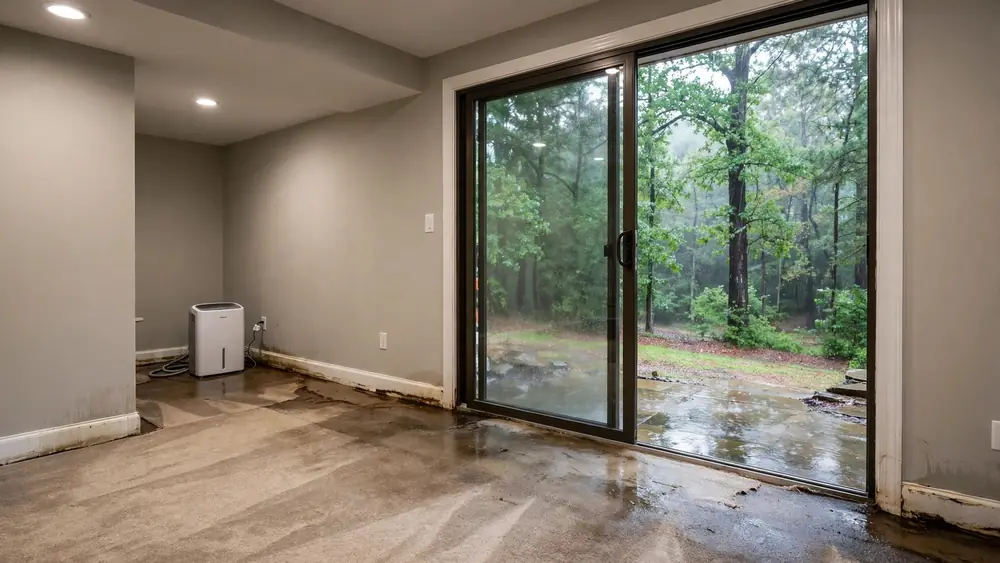
Key facts: Basement Water Damage in Peachtree Corners
What differs
Basements finished after the fact
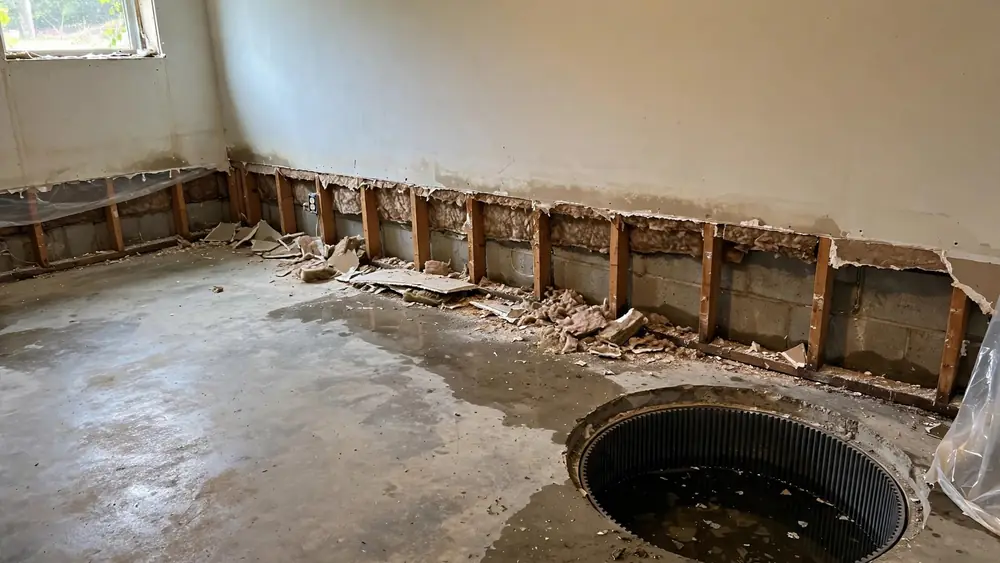
A finished lower level in a house here may date from a different decade than the rest of the home, and may have been built with less attention to water than a modern job would. Framing can sit directly on the slab, with paper-faced drywall running to the floor and insulation against block. All of that holds moisture when water arrives. Finding out what is behind the wall is part of the job, because it decides how much must come out.
The usual entry points are the floor-wall joint on the buried side, window wells, a door at the bottom of an outside stair, and the sump pit if you have one. Water may not come from the wall at all, because a failed water heater or a washer hose can produce much the same result. Before you assume anything about waterproofing, check the water meter with everything turned off.
Fixes
Matching the cause to the repair
| Cause | Starting fix | If it continues |
|---|---|---|
| Gutters overflow on the uphill side | Clean, enlarge or extend | Surface drain to a safe outlet |
| Grade slopes to the wall | Regrade and rework beds | Curtain drain uphill |
| Outside stairwell drain clogged | Clear it, add a screen | Check that the line is sound |
| Sump pump failure | Service and add a backup | Larger pit or second pump |
| Seepage at floor joint | Interior drain to a sump | Exterior waterproofing assessment |
Crawl sections
When a house has both
Plenty of homes on slopes pair a lower level with a crawl space under the rest of the house. Moisture can pass between them through a framed wall or an access door, so drying one and ignoring the other is a common way to leave a lingering smell. Check that the ground in the crawl section is covered, that the insulation has stayed in place and that condensate lines from the air handler are not draining onto the soil. A dehumidifier in the lower level will not reach much beyond a closed door, so ask how the contractor plans to deal with both spaces.
Rebuild
Coming back stronger after a lower-level flood
- 1
Find the cause first
Rain, plumbing or sewer each have different remedies.
- 2
Confirm dry readings
Bottom plates, block and slab should all reach their target.
- 3
Pull permits where needed
In the city limits, go through the Building Division. [4]
- 4
Consider tolerant materials
Moisture-resistant board with a gap at the floor, and flooring that can be lifted, may suit the room.
- 5
Raise what you can
Keep outlets, shelving and stored goods well above the floor.
- 6
Test before storm season
Run the sump, check the gutters and look around after the first big rain.
Flooding
River, creek and street water
The Chattahoochee runs along roughly seven miles of the city's border, and the 2009 flood put a Norcross-named gauge 2.51 feet above flood stage. [1] [2] If your home sits near the river or a tributary, look it up on FEMA's map and ask your agent about flood cover and its waiting period. [5] [3] NFIP basement limits can leave out much of a finished lower level, so read how your policy defines a basement, and keep valuables elsewhere. Sewer backup is usually a separate add-on, which is worth checking if your lowest fixtures sit beneath the level of the street.
If water came from outside, treat it as contaminated. Finishes that soaked it up generally come out, and it is sensible to keep vulnerable people away until cleaning is done. Report flooded streets and broken storm drains to the county's dispatch line rather than attempting to clear them yourself. [6]
Trees
Roots and wet slopes
Mature trees bring shade and leaf-filled gutters, and their roots can block drains or find their way into old sewer laterals. Where a French drain was installed years ago, roots and silt may have clogged it without anyone noticing. A camera check of a drain line is a modest step before anyone proposes new excavation. Grading work around tree roots can harm the tree, so consider asking an arborist about significant specimens before digging close to them.
Crawl and HVAC
Equipment on the lower level
Many lower levels house the furnace, air handler and water heater in a utility room that may be the first place to flood. If water has touched gas valves or controls, leave them off until a qualified technician has checked them. Ducts running under a slab or at floor level can hold water, and that water can then feed musty air into the whole house once the system restarts. Ask about this before turning on the system. A condensate drain that backs up in summer is a frequent cause of a mystery wet patch in a nearby room, so have it cleared as part of annual service. When a utility room is rebuilt, ask whether equipment can stand on a raised platform, and whether a pan and an alarm can be added. Those small changes can make the next event much less serious. Keep the area around the equipment clear of boxes, because stored items hide leaks until the damage has spread well beyond the closet.
After any flood, also replace the furnace filter and have the blower checked before running the system for long periods.
Ask the technician to note what was checked.
Questions
Peachtree Corners basement questions
Is waterproofing the first thing to do?
Usually not. Check gutters, downspouts and grading first, because they account for many wet lower levels and are simpler to fix. Confirm the leak is not plumbing. Then consider interior drains or exterior waterproofing if water continues to come in.
What does it mean that my basement is only partly underground?
Your walk-out may still count as a basement under a flood policy, depending on how the floor sits relative to the ground on all sides. Ask your agent to apply the definition to your home, because it affects what is covered. [3]
Should I rebuild with the same carpet and drywall?
You can, but it may not be the wisest choice if water could return. Flooring that lifts out, moisture-resistant board and a small gap at the base of the wall make future recovery easier. Fix the cause first, whichever finishes you pick.
Does the city need to approve a rebuilt basement?
Permits are common for electrical, plumbing and framing work inside city limits, and inspections generally happen before walls are closed. Ask the Peachtree Corners Building Division or your contractor about your exact scope, and keep the paperwork for later resale. [4]